
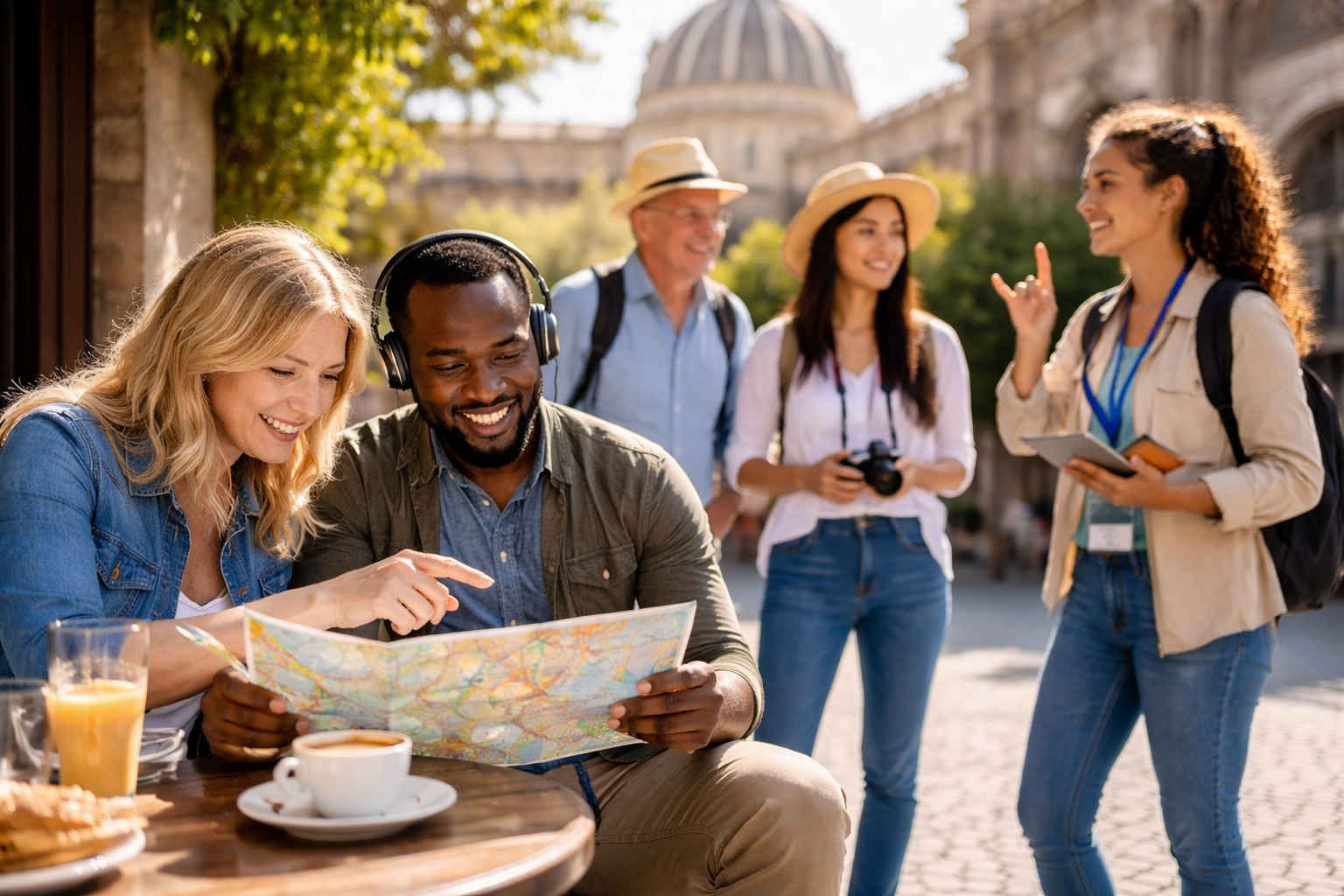
Travel is often described as a sensory experience shaped by movement, observation, and interaction. While sound plays a central role in many traditional travel narratives, it is not the only way travelers connect with places. For Deaf individuals, travel is primarily a visual, spatial, and relational experience, built through observation, direct interaction, and contextual understanding. Deaf accessible tourism emerges from this perspective, challenging assumptions about how travel should be experienced and communicated.
In recent years, accessibility has shifted from being a reactive solution to becoming a design principle. Rather than adapting travel experiences after barriers appear, inclusive tourism models aim to anticipate different communication needs from the outset. This shift reflects a broader change in the travel industry, where diversity of experience is increasingly recognized as a value rather than a limitation.
Europe, with its layered history and complex cultural landscapes, offers a compelling environment for this transformation. Cities, regions, and heritage sites are rethinking how stories are shared, moving beyond audio based interpretation toward more inclusive and visually engaging formats.
How Communication Shapes the Travel Journey
Communication influences every stage of a journey, from inspiration and planning to on site experience and memory building. For Deaf travelers, access to clear and reliable information is essential to making informed decisions and navigating unfamiliar environments with confidence. When communication is inaccessible, uncertainty increases, often affecting the overall quality of the experience.
Deaf accessible tourism addresses this challenge by emphasizing clarity, transparency, and adaptability. Written itineraries, visual explanations, and direct face to face interaction allow travelers to fully understand what they are experiencing rather than relying on partial interpretation. This approach does not simplify content but reframes it in ways that are accessible without losing depth or meaning.
Importantly, Deaf travelers use diverse communication strategies. Some rely on sign language, others on lip reading or written communication, and many combine methods depending on context. Inclusive travel design recognizes this diversity and avoids one size fits all solutions.
Cultural Discovery Beyond Spoken Narratives
Cultural tourism often relies on guided explanations, storytelling, and historical narration. While these elements are traditionally delivered through speech, they can also be conveyed through visual storytelling, contextual cues, and participatory experiences. Deaf accessible tourism encourages this shift, opening new ways of engaging with culture that benefit all travelers.
Visual interpretation panels, guided walks focused on observation, and experiential activities rooted in local traditions allow travelers to connect with places through action and presence rather than passive listening. In this sense, Deaf accessible tourism aligns closely with experiential travel trends that prioritize authenticity and engagement over information overload.
Across Europe, cultural institutions and travel professionals are increasingly aware that inclusive interpretation enhances understanding rather than diluting it. By designing experiences that are visually rich and interactive, destinations can communicate complex histories in more engaging and memorable ways.
Travel Planning as an Accessibility Factor
Accessibility does not begin at the destination. It starts during the planning phase, when travelers evaluate options, schedules, and expectations. For Deaf travelers, access to clear written information, transparent travel conditions, and responsive communication channels is critical.
Deaf accessible tourism emphasizes structured planning supported by accessible communication. This approach reduces uncertainty and allows travelers to focus on anticipation rather than problem solving. Clear timelines, written confirmations, and accessible customer support contribute significantly to a sense of autonomy and trust.
In discussions about inclusive travel planning, the concept of deaf accessible tourism is increasingly connected to structured models that integrate communication awareness into the organization of travel experiences. Within professional conversations on inclusive design, deaf accessible tourism is referenced in relation to approaches that accommodate diverse communication needs while preserving the cultural integrity and authenticity of destinations.
Everyday Interactions and Social Inclusion
Beyond tours and itineraries, travel is shaped by everyday interactions. Ordering food, checking into accommodation, asking for directions, and engaging with local communities are all part of the journey. For Deaf travelers, these moments can be enriching or challenging depending on communication awareness.
Deaf accessible tourism promotes environments where visual communication, patience, and mutual understanding are valued. Staff trained in basic communication strategies and awareness can significantly improve the quality of these interactions, creating a more welcoming atmosphere for Deaf guests.
These practices also contribute to broader social inclusion. When communication becomes more visual and intentional, it benefits travelers from different linguistic backgrounds, seniors, and anyone navigating unfamiliar contexts.
Flexibility and Independence in Travel
Modern travelers increasingly seek flexibility and autonomy. Deaf accessible tourism supports this trend by offering models that balance independence with structured support. Travelers can explore at their own pace while relying on accessible information and communication when needed.
Independent travel supported by accessible planning tools empowers Deaf travelers to make choices based on personal interests rather than accessibility constraints. This approach reflects a wider evolution in tourism, where inclusion is about expanding possibilities rather than limiting them.
In Europe’s diverse travel landscape, flexibility becomes especially important. Different regions vary in accessibility awareness, making preparation and adaptable communication essential to a positive experience.
A Broader Vision for Inclusive Travel
Deaf accessible tourism represents a shift in how travel experiences are imagined and delivered. It invites the industry to rethink communication, storytelling, and interaction in ways that reflect real human diversity. Rather than creating separate experiences, it encourages more thoughtful design that enriches travel for everyone.
As travel continues to evolve, inclusive communication will play an increasingly central role in shaping meaningful and memorable journeys. By embracing deaf accessible tourism as part of a broader commitment to inclusion, the travel industry moves toward a future that values understanding, connection, and shared experience across cultures.