
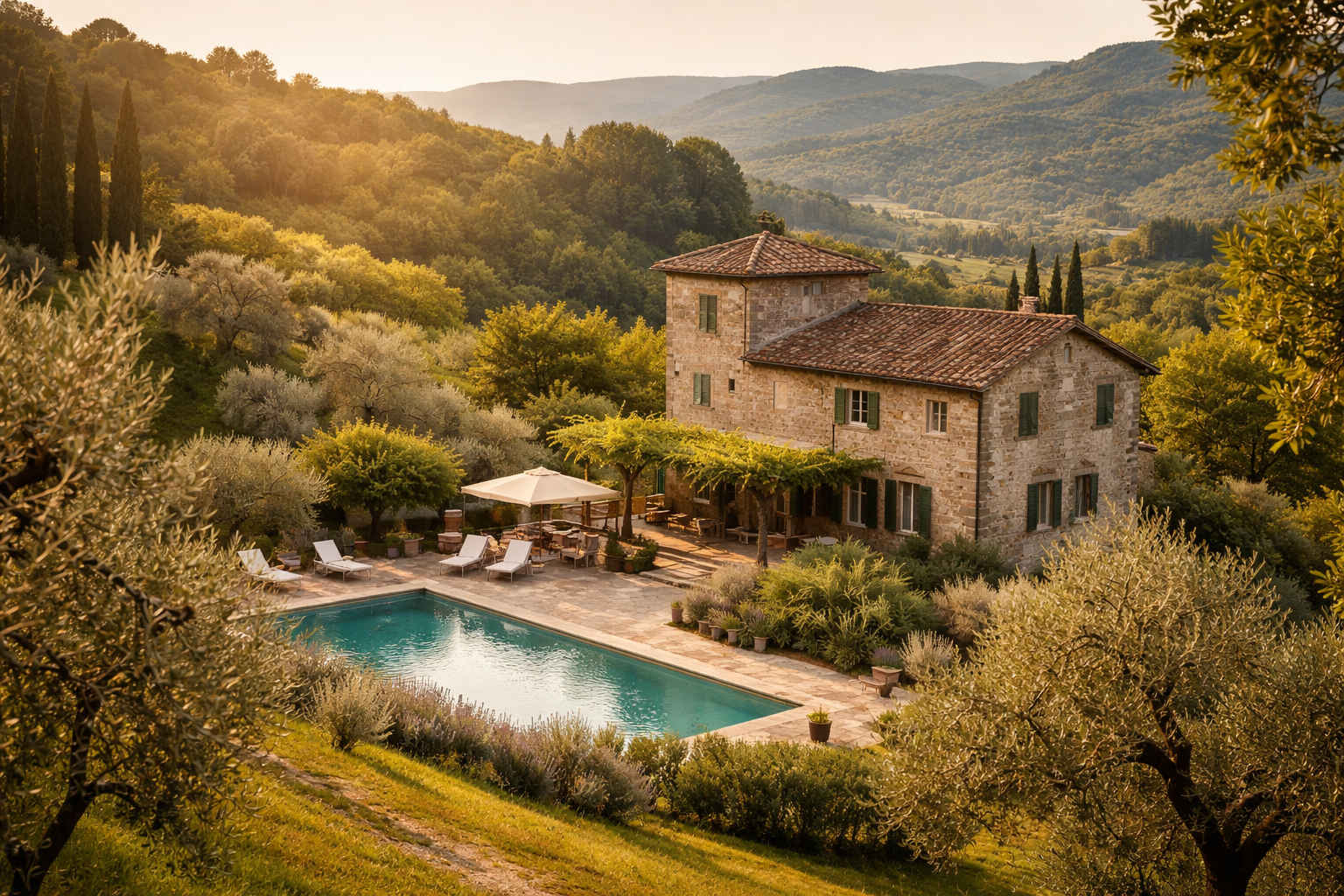
The Charm of Tuscan Villas Between History and Landscape
For centuries, Tuscany has been one of the most sought after destinations for travelers looking for a balance between art, nature and quality of life. According to official data from the Tuscany Region and ISTAT, rural tourism represents an increasingly important segment of the regional offer, thanks to the combination of historical heritage, agricultural traditions and unique rolling landscapes. The areas surrounding Florence provide an especially privileged setting, where olive groves, vineyards and medieval villages blend harmoniously, creating the ideal environment for relaxing yet culturally enriching stays.
Villas set in the Tuscan countryside perfectly meet this demand for authenticity. Often created from restored historic buildings that preserve their original architectural features, they combine traditional elements such as exposed stone, wooden beams and terracotta floors with contemporary comfort and energy efficient solutions. This balance between past and present is one of the main reasons why the Florentine countryside continues to attract international visitors.
Mugello and the Hills North of Florence
North of Florence lies Mugello, a hilly area characterized by forests, olive groves and small historic towns. The region is known not only for its landscapes but also for its historical connections and for the presence of Medici villas recognized as UNESCO World Heritage Sites. Its proximity to Florence allows visitors to alternate days dedicated to exploring world renowned art and architecture with moments of relaxation in a quieter and more private natural setting.
Staying in this area provides easy access to a wide range of experiences: food and wine itineraries, trekking routes, visits to historic villages and tours of major Tuscan cities such as Siena, Pisa, Lucca and San Gimignano. This strategic location is a key element for those seeking a peaceful base that remains well connected to cultural landmarks.
Features of a Contemporary Tuscan Villa
Mid to high end villas in the Florentine hills tend to share several recurring characteristics:
- spacious interiors with multiple bedrooms and private bathrooms
- large gardens or land with olive groves
- fully equipped kitchens and welcoming living areas
- attention to sustainability and energy efficiency
- privacy and tranquility away from urban traffic
This residential model responds to the needs of families and small groups looking for independence, generous space and a direct connection with the rural landscape.
Authentic Experiences: Olive Oil, Cuisine and Tradition
One of the defining elements of the Tuscan countryside is the culture of extra virgin olive oil. Olive cultivation, documented since Etruscan times, remains a pillar of the regional agricultural economy. According to the Tuscan PGI Olive Oil Consortium, quality stems from native cultivars and increasingly sustainable harvesting and pressing techniques. Staying in a rural environment often provides the opportunity to discover these traditions firsthand through tastings and guided experiences connected to the territory.
Local cuisine follows the same philosophy, emphasizing simple and seasonal ingredients. Cooking classes, widely offered in countryside properties, allow guests to learn traditional recipes such as fresh pasta, ribollita soup and classic roasted dishes. These activities transform a holiday into a broader cultural journey rooted in local identity.
Architecture and Sustainability in Rural Residences
In recent years, environmental sustainability has become central within the hospitality sector. Renovations of historic rural buildings increasingly focus on advanced insulation systems, low consumption installations and high energy performance certifications. This approach preserves architectural heritage while reducing environmental impact.
Residences developed from ancient towers or traditional farmhouses reflect the layered history of the territory. Restoring these structures is not simply a construction project but a cultural process that enhances buildings shaped by centuries of agricultural and community life.
An Example in the Heart of Mugello
Among the private villas immersed in Mugello’s olive groves is the property described on Porcigliano.com, which presents a residence located in the hills of Polcanto, within the municipality of Borgo San Lorenzo. Renovated on the remains of a medieval tower, the villa accommodates up to eight guests with four bedrooms and four bathrooms, maintaining a distinctly Tuscan style alongside strong attention to energy efficiency. Its position allows Florence to be reached in approximately twenty minutes by car, while offering a secluded setting surrounded by olive trees and nature.
This type of property illustrates how rural hospitality can successfully combine territorial identity, modern comfort and accessibility to the region’s major cultural centers.
Culture and Nature in Balance
The success of villas in Mugello and the Florentine hills is built on a precise balance: architectural authenticity, preservation of local traditions, sustainability and connection to a historically rich territory. The artistic heritage of Florence and the expanses of olive groves that define the surrounding countryside are not separate elements but parts of a single cultural system.
Choosing this setting means experiencing a quieter yet equally meaningful side of Tuscany, where every detail, from the stone of ancient towers to the scent of freshly pressed olive oil, contributes to a coherent and deeply rooted sense of place.
The Broader Value of Rural Tourism
Rural tourism in Tuscany is not merely an accommodation formula but a broader model of territorial enhancement that intertwines agriculture, culture and architecture. Villas set in the greenery, especially in the hills north of Florence, represent one component of this system, offering a privileged perspective on a landscape that has inspired artists, travelers and scholars for centuries. In this context, a stay becomes an opportunity for conscious discovery, a way to better understand the relationship between environment, history and local identity that makes Tuscany one of the most iconic regions in the world.